
You can refuse comments about your body without criticising yourself or sharing medical information. Name the kind of comment you want to stop, say what subject is acceptable if you want one and take distance when the request is ignored. A compliment is not automatically welcome.
Describe the behaviour
Quote the recurring comment or name the audience if it happened in public. Keep the focus on what was said and how you want the conversation to change, rather than defending the body being discussed.
Set the limit without a debate
A direct sentence such as “please do not comment on my weight” is complete. You can offer another topic, but you do not owe a replacement subject. Avoid negotiating whether the remark was technically positive; your boundary applies to compliments too.
Use distance when needed
If the person apologises and changes course, you can decide whether to continue. Repeated remarks after a clear request are useful information about safety and respect. You may leave, stop replying or decline another date without teaching a lesson.
Message examples
Set a clear boundary
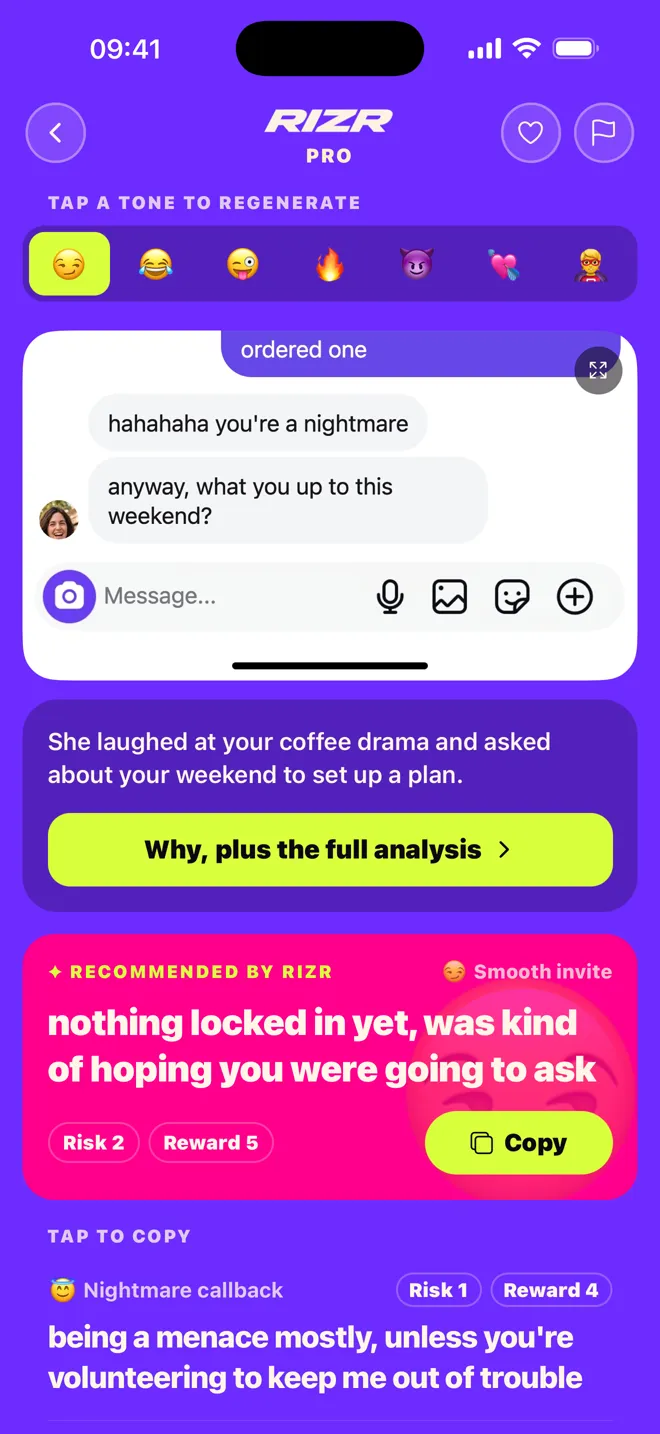
Please don’t comment on my body, even as a compliment. I’d rather talk about the film we just saw.
It names the rule and offers a new subject without asking for a medical explanation.
Respond to repetition
I already asked you to stop discussing my body. I’m ending this conversation now because the request hasn’t been respected.
It identifies the repeated behaviour and gives a proportionate, immediate boundary.
Frequently asked questions
Can I ask for no comments without explaining my reason?
Yes. You can name the topic you do not want discussed and choose whether to share more. Personal information is yours to disclose, not a condition for having a limit.
What if the comment was meant kindly?
A kind intention does not decide how a comment lands. You can acknowledge the intention and still ask for the behaviour to stop.
Updated 25 October 2026 · By the RIZR team